
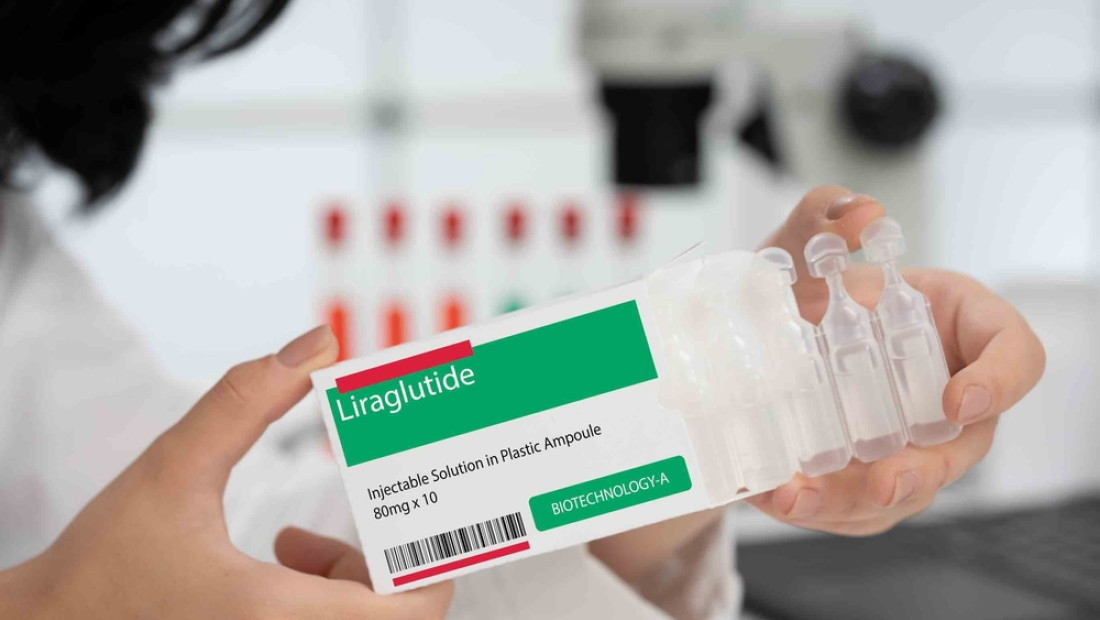
Glucagon-like peptide-1 (GLP-1) receptor agonists are used in the treatment of type 2 diabetes and obesity.
Study examines positive communication with children, support for parents in weight management
Parents who are taking Glucagon-Like Peptide 1s (GLP-1) and other obesity management medications (OMM) are talking with their children about the medications and associated behaviors, a recent survey found.
“This was the first survey that we know of that’s explored communication” between parents and children about OMMs, said Professor Keeley Pratt, a professor who teaches in the college’s Couple and Family Therapy degree programs under Human Development and Family Science.
The survey was published recently in Obesity: A Research Journal.

Prescription medications that treat obesity work in different ways, according to the National Institutes of Health. Some medications, like GLP-1s, help users feel less hungry or full sooner and can offer health benefits beyond weight loss, Pratt said.
“They decrease appetite and increase satiety,” Pratt said during a recent presentation of her research at Ohio State’s Kirwan Institute. “They decrease the risk of heart attack and decrease cardiovascular risk.”
Pratt cited data indicating that more than 40% of U.S. adults are classified as obese, resulting in an increased demand for OMMs.
“More adults are looking for these medications,” she said. “The most recent report that we have is that 1 in 8 adults has taken an obesity management medication.”
OMMs are most effective for long-term weight loss when paired with behavioral changes, such as eating more fruits and vegetables, Pratt said.
“It’s important to point out that these medications are effective, just like individuals who lose weight after having bariatric surgery,” she said. “What really makes the difference is when these medications are tapered or eliminated; we often see weight regain for the individuals who don’t change their behaviors.”
The survey found that children may notice changes in a parent’s weight — even if the parent doesn’t tell their children about taking OMMs, Pratt said.
“These medications can be injected discreetly … with parents who often use them in a bathroom where they have some privacy, or they wait until their children go to bed to give themselves their injections,” she said.
Communication supports positive effects for children, parents
“The real question is: What is happening between parents and children? … When parents may be losing weight, are they changing behavior at the same time and what does the child pick up on?”
Parents can model behavior for children, even if they’re unaware that children are observing them, Pratt said.
“If they’re eating less but children don’t know why they’re eating less, that could look like dieting,” she said. “We’re curious in how this is playing out, and why we’re interested in this is … because these medications are so popular and are so present right now.”
The survey included 211 parents, 80% of whom were women. The survey found that 50% of parents talked with their child about the decision to take OMMs; of those, 75% talked openly about it.
Parents with older children were more likely to have open communication about OMMs. Parents whose children are also overweight were also more likely to have conversations about OMMS with their children.
Children who made comments to parents about their own weight were more likely to notice parents’ weight loss.
The study concludes that greater focus on communication around OMM use and healthy changes in the family may provide increased positive effects to children, while supporting parents in long-term adherence to weight management interventions.
“The intent behind this particular paper isn’t to shame parents,” Pratt said. “It’s to explore what are they doing and what could be more helpful.”
Co-authors include Selena Gonzlez-Jordan and Sabrena F. Noria, both of the Department of Surgery, The Ohio State University Wexner Medical Center, and Joseph A. Skelton, Wake Forest University School of Medicine, Department of Pediatrics.


