

Alumna Lori L. Eisel, far side of table, second from left, coaches high school students during the 2025 Financial Planning Academy, which enhanced their knowledge about personal finance and the financial planning profession.
Financial advisors are people you need in your life more than you might think. They can help with sticky financial situations, help shape your future, advise you on which financial choices are safe and practically become part of your family.
“I have clients who tell me, ‘You know more about me than I know about myself!’” Lori L. Eisel, a Certified Financial Planner®, said. “They truly have become more like family and very close friends.”
Financial advisors like Eisel display true passion for their work and want to encourage others to choose the profession. An alum of the college’s Family Resource Management program, she owns a fee-only registered investment advisory firm called Arcadia Financial Partners in Pickerington, Ohio. She also is a lecturer, teaching some of the program’s courses.
Professor Martina Peng is another Certified Financial Planner® who cares deeply about her work. She teaches students at Franklin University how to manage their own finances and helps them be prepared for the future.
She encourages more students to consider this career. She pointed out that the job is about more than just mathematics; it also is about having the soft skills to listen and talk to people.
More people who have these soft skills are needed for the job. This is because, according to the United States Occupational Outlook Handbook, the employment for financial advisors will grow 10% from 2024 to 2034, which is much faster than the average occupation.
The value of holistic financial planning
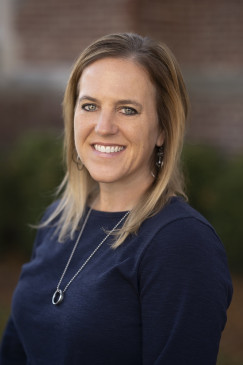
“I love teaching,” alumna Lori Eisel said. “I like to share what I do and how I do it. Financial planning is more than just investments. Holistic planning is unique, offering strategic tax plans, a review of insurance and estate documents, among other things.”
Eisel started her career at Nationwide Insurance’s call center. After earning a master’s degree in the college’s Family Resource Management program, she moved to helping public school teachers enroll in Nationwide’s supplemental retirement plans.
Later, she joined Hamilton Capital Management, eventually becoming a vice president while doing work she loved.
Financial planners can help anyone who struggles with money, she said, but especially those in the middle class.
“Just because they don't have a million dollars or more to invest doesn't mean that they shouldn't be able to get really high-quality advice.”
Eisel still provides planning services to her clients at Hamilton Capital, while Hamilton provides investment services. She supports a diverse clientele within her company, specializing in unmarried and divorced women.
This is, in part, because Eisel’s husband, a retired firefighter, died unexpectedly. He had been her most stalwart cheerleader when she started her business in 2018.
They had always cared for their five children together while she managed her business. But suddenly, she was alone, managing it all. Her experience makes her empathetic to her clients’ needs.
Many wonder if there is a difference in the way men and women approach finances. Eisel cites a 10-year study of 5 million customers by financial services firm Fidelity showing that women outperformed men in investment returns.
That might be because women tend to use an investment strategy that some call the “ostrich effect,” Eisel said. “We invest our money … stick our heads in the sand and don't pay attention to it (rather than trading); then 30 years later, our money has grown.”
Given the need in the industry, she encourages students to consider financial planning as a career.
She also recommends that all students take one or two financial courses so they can learn how to invest their money for their future. "It is crucial for everyone to educate themselves about financial matters," she said, "and to learn how to manage their entire financial life — far beyond just their investments."

“During my time in this program, I felt supported by the advisers and was provided with a multitude of resources to help me find internships and connections in the financial planning field. When I was deciding my major, what was important to me was finding a job where I can help others and see the impact of it. As a financial advisor, I get to help people every day reach their financial goals. It truly is rewarding to build relationships with my clients and see them succeed.”
- Hannah Sillanpaa, ’22 BS Consumer and Family Financial Services, Certified Financial Planner® and staff financial advisor, Summit Financial Strategies
What makes a good financial planner

Alumna Martina Peng is a prime example of a Certified Financial Planner® focused on being college faculty.
Peng, who earned a PhD in Family Resource Management from the college, chairs the Department of Business and Management and the BS in Financial Planning program at Franklin University.
With more than 17.5 years of experience teaching financial planning and engaging with professional organizations in the industry, Peng has witnessed the profound impact this field can have on people’s lives.
“Financial planning as a profession sits at the intersection of technical knowledge, lifelong practical skills and meaningful human connection,” she said, “a rewarding combination for students. It is one of the few academic majors in which students benefit personally from day one.”
“Every concept you learn applies directly to your own life,” she said. Unlike subjects that feel abstract or distant, financial planning teaches students how to make decisions they will use lifelong: saving for retirement, managing debt, buying a car or home, understanding taxes.
For young adults just beginning their careers, these skills offer independence and eliminate the uncertainty many people feel when navigating finances.
Peng has taught students from every walk of life; each brings different financial experiences and challenges. “What touches me most is hearing students’ life stories,” she said. “Their resilience reminds me why financial planning education matters.”
Peng is eager to see more people enter the financial planning field. She believes many don't choose the career because they mistakenly assume it requires advanced math.
She addresses this concern directly.
The math involved in financial planning is important but manageable, she said. The field requires comfort with percentages, interest calculations, basic statistics and use of financial calculators. It does not require calculus, differential equations or the quantitative modeling used in actuarial science or financial engineering.
“Students are often surprised to learn that the hardest part of financial planning is understanding people — their goals, anxieties and what truly matters to them,” Peng said.
The profession blends analytical thinking with communication, empathy and problem solving. What matters is the advisor’s ability to translate numbers into clear, meaningful guidance.
“You do not need to be a math genius,” she said. “You need to be thoughtful, organized and able to explain things in a way that makes people feel supported.”
Financial planning can be an ideal career for students who like work that is fundamentally relational. Clients share deeply personal information, including family history, fears about retirement, frustrations about debt and hopes for their children.
“Money is emotional,” Peng said, “and many clients feel vulnerable discussing it. This relational strength is not only valuable, but also central to effective advising. Those who excel at building trust can create a safe space where clients feel heard and understood."

The profession also offers exceptional flexibility, so that anyone can design a career that fits their lives. Work can be remote and allows customizable schedules and opportunities for independent practice. “It provides rare elasticity without sacrificing income potential,” Peng said.
Even students who choose different career paths benefit enormously from understanding personal finance.
“Everything you learn in a financial planning class stays with you for life,” Peng said. “Whether you become a financial advisor or not, this knowledge helps you take control of your future.”


