

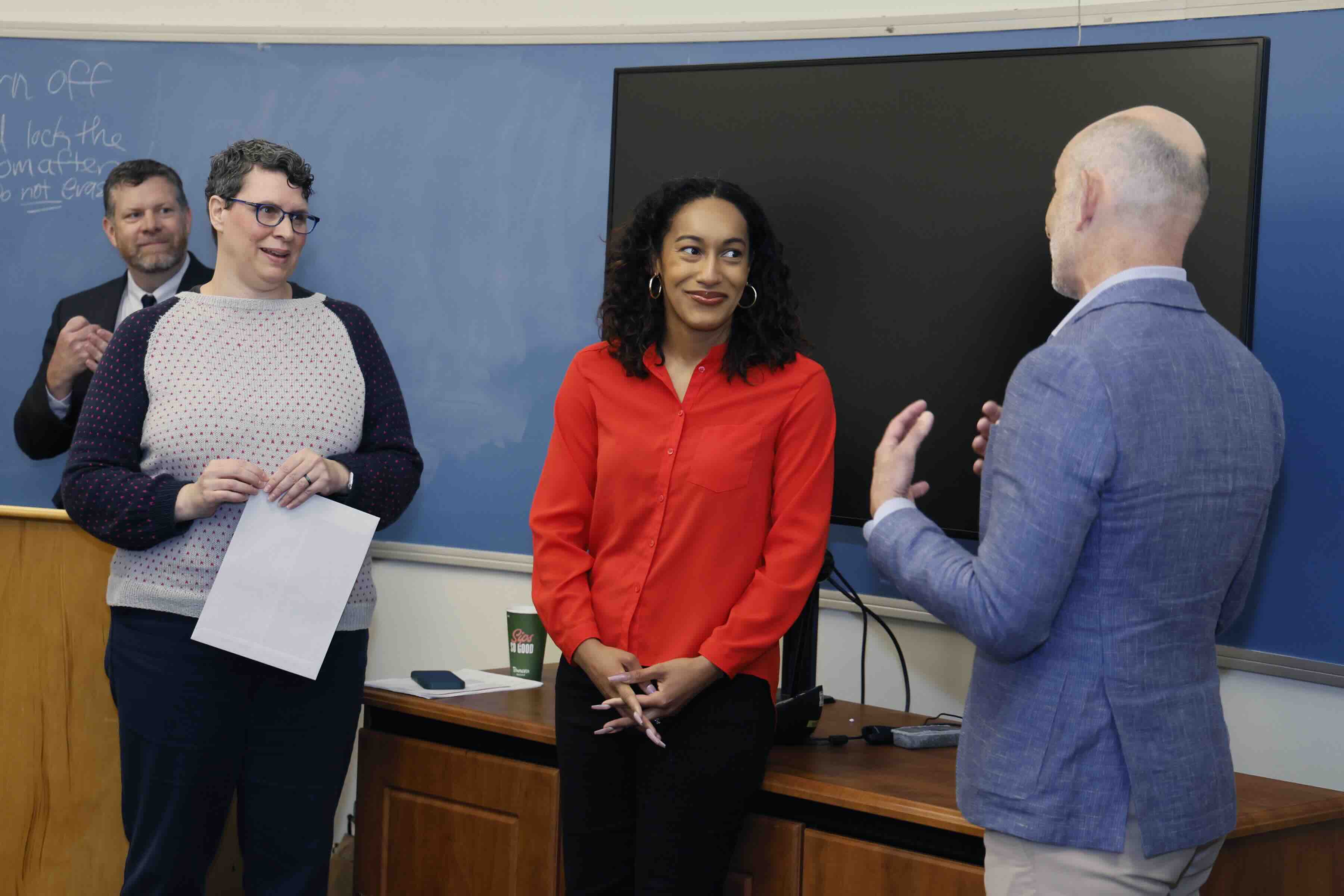
Jasmine Abukar, in red, reflects her joy upon receiving the award. Present are L-R: Bryan Warnick, professor and chair, Department of Educational Studies; Helen Malone, vice provost for Faculty Affairs and professor in the department; Alex Williams, Abukar’s MA student and representative from the Alumni Association; Tasha Snyder, professor and associate dean for Faculty Affairs; and Patrick Louchouarn, professor and senior vice provost for Leadership and External Engagement.
Enthusiastic nominations from students and faculty led to Jasmine Abukar, a clinical assistant professor of higher education and student affairs, receiving one of The Ohio State University Alumni Association’s most coveted awards this spring.
“Dr. Abukar is a wonderful professor, educator, woman and human being,” wrote one of her graduate student nominator. “She constantly challenges us to think critically while providing a safe space to learn, grow and make mistakes. She pushes us to our full potential because she truly believes in us.”
“She has a lot of experience but is always willing to learn from her students as well. As a human, she is genuinely kind and understanding and inspires me every day to strive for excellence and expand my perspective. She is AMAZING, hands down."
Abukar was sitting among her peers in Ramseyer Hall during a meeting of the Department of Educational Studies when the unexpected happened.
A delegation of university and college leaders and students entered the room.
University leaders highlight praise by Abukar’s nominators
Helen Malone, vice provost for Faculty Affairs as well as a professor in the department, announced to the assembled faculty and staff that Abukar was one of the 10 faculty to receive this year’s Alumni Association Distinguished Teaching Award.
Malone invited a stunned Abukar to join her and the other leaders at the front of the room.
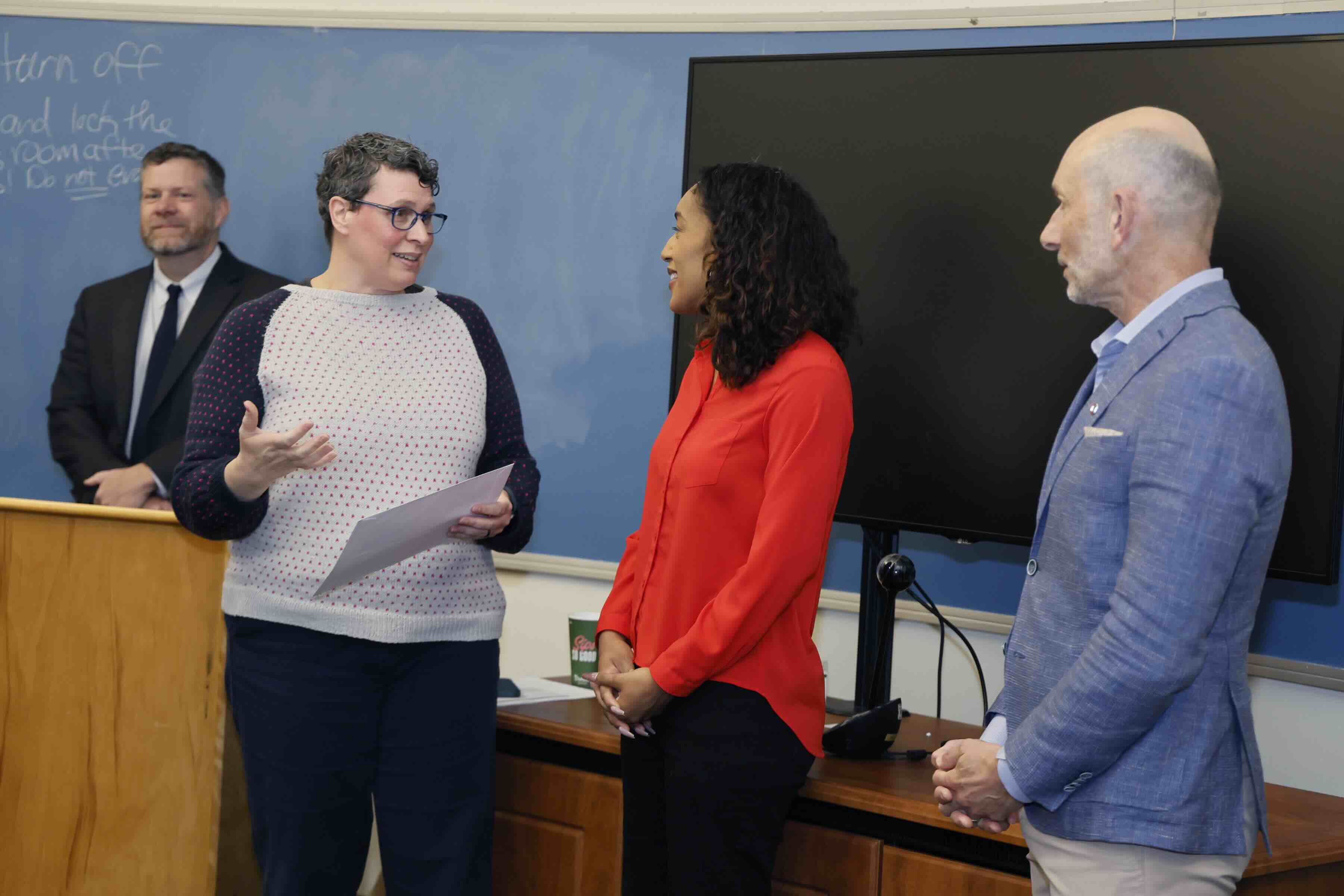
“What stood out to me in your nomination, and is common across the winners, is your willingness and ability to show up for your students, to allow them space to come as themselves, to learn, experiment, test and ask questions and to be secure in their ability to do this. So, on behalf of the Office of Academic Affairs and the Alumni Association, congratulations.”
Patrick Louchouarn, senior vice provost for Leadership and External Engagement, added his appreciation. “Two things really stood out for me,” he said. “One is, yes, how you show up for your students, but more importantly is how you recognize them in their wholeness.”
“What I read from all your students is how they feel seen, how they feel safe to fail, to experiment, how you help them be secure and safe in the learning environment,” he said.
“And yet your teaching is very thorough, and it’s challenging. So, you’re creating a place where they’re uncomfortable, yet they’re ready to grow, and this is exceptional.”
“Second is how you represent your title,” he said. “Clinical teaching faculty are extremely important to our university, and you’re showing how it’s done, demonstrating the importance of that title in such a way that I cannot thank you enough for showing up as such a professional.”
“I see your model in that space, and I thank you for what you do for the mission of the university, for being an inspiration.”
College leaders, Alumni Association add accolades
Tasha Snyder, associate dean for Faculty Affairs in the college, represented Erik Porfeli, interim dean of the college. “He notes your strong and intentional teaching practice,” Snyder said. “Your genuine engagement with a student-centered approach for learning. ‘You help students connect theory to real-world practice,’ he said. ‘You balance challenging your students with supporting them.’”
“'You have a deep commitment to your students, who make an impact beyond the classroom. And then there’s your leadership, with care and connection, especially your connection to students beyond the classroom as an advisor and a mentor,’” Snyder quoted Porfeli.
“’Overall, you stand out for providing rigor, care and real connection with students, doing the kind of teaching that really sticks with people and shapes how they move forward in the world. So, congratulations.’”
Alex Williams, a second-year Master of Arts student in one of Abukar’s courses and an engagement and alumni relations specialist at the Alumni Association, spoke next. “As Dr. Abukar’s student, I can attest to everything that has been mentioned,” she said. “I’m so excited that I can congratulate you on behalf of the Alumni Association.”
She presented Abukar with a commemorative buckeye, one of the many donated by alumni to the association and chosen specifically for this occasion.
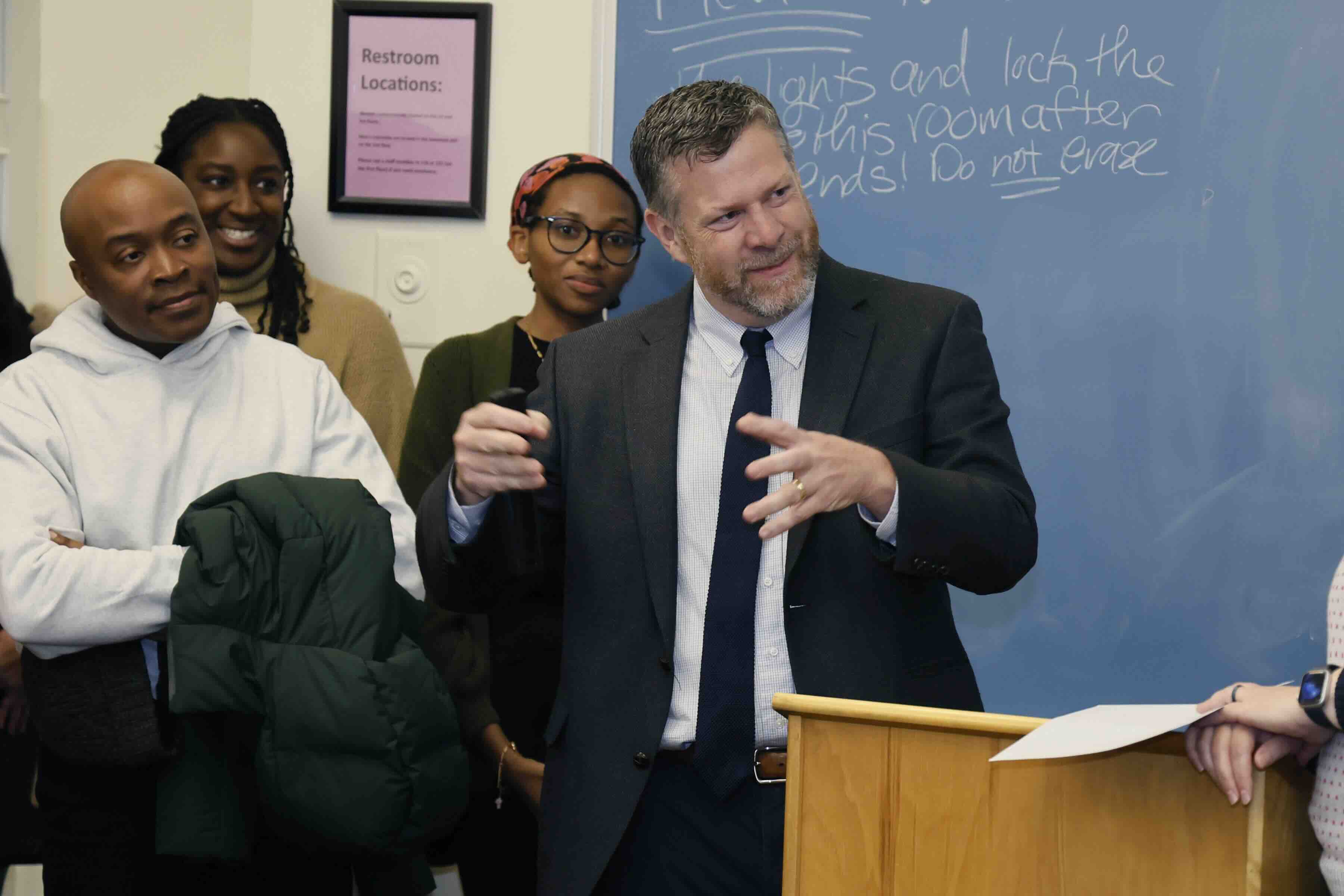
Bryan Warnick, chair of the Department of Educational Studies, said he had looked at Abukar’s annual review letters, which are created about each faculty member. “Without a doubt, you’re one of the top teachers in our department,” he said. “The student comments were phenomenal.”
As evidence of Abukar’s exceptionality, “Normally, we give these awards during a class session,” he said, “but you’re doing something so innovative in your class tomorrow, we didn’t want to interrupt it. So, congratulations.”
Abukar’s extensive teaching as clinical faculty
Abukar said that she and the students ended the course, ESHESA 7854: Activism on College Campuses, with a teach-in, which is in the campus activism tradition.
“Students created and hosted interactive workshops in a classroom, including a multimedia art exhibit, an original board game and a choose-your-own-adventure-style case study, on various topics,” she said.
“The objective was for students to demonstrate their learning in the course and address the question: What can student affairs educators and administrators learn from recent campus activist movements? We invited community members to attend.”
The event was well received, Abukar said. “A faculty member from the English department wrote when giving feedback, ‘It’s so important to see students grappling with the issues colleges are facing,’” she said. “One student even brought her parents. Her father told the class he wished we could bring the teach-in to people off campus.”
Clinical faculty at Ohio State differ from tenure-track faculty. They bring extensive experience from the field, focus on real-world learning and teach the application of theory into practice.
Since Abukar joined the faculty in 2022, she has taught seven courses multiple times each. For instance, she teaches ESHESA 7500: Introduction to the Profession of Student Affairs. Required for all master’s students, the professional seminar introduces them to the competencies of the profession and the academic preparation they will undergo.
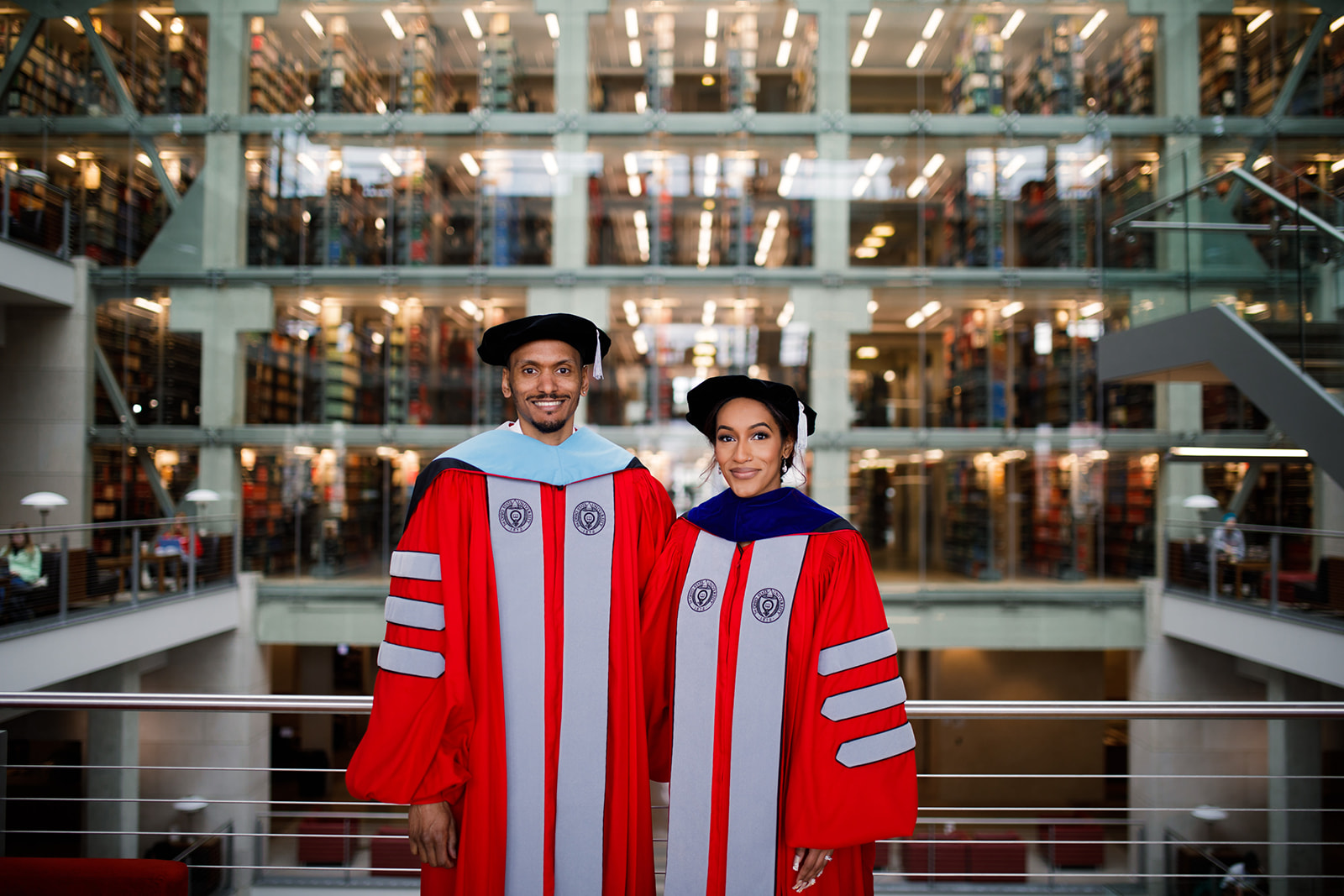
One of Abukar’s graduate student nominators wrote, “Dr. Abukar creates an intellectually challenging and engaging class environment. … She is very open-minded and seriously strives to push us beyond our comfort zone so that we can grow as individuals. She appreciates our feedback and thoughts and actually utilizes them to create a welcoming … classroom setting.”
Coordinator of the Student Personnel Assistantship program
In addition to her teaching, Abukar coordinates the Student Personnel Assistantship, a paid, professional apprenticeship in a student affairs role at Ohio State or a neighboring university.
“I match MA and PhD students (amounting to 50+ students yearly) with funded assistantships in partner units that will complement their learning,” Abukar said. “I also support all HESA students from application to graduation via recruitment efforts, professional development, programming and more as needed.”
“I also support our academic program alongside our program coordinator, Clinical Associate Professor Amy Barnes. This includes posting on social media, working on funding for students and engagement with alumni.”
In terms of research, clinical faculty do not spend as much time conducting original research as they do teaching about research and supporting student researchers.
However, Abukar said she is “passionate about teaching research literacy and academic writing skills, particularly among doctoral students (both PhD and EdD). “I do this through extensive doctoral committee work for both degrees and teaching about research and writing in my courses.”
“I also mentor beyond doctoral committee work, and I regularly take on teaching apprentices.”
In terms of her scholarship, Abukar has a chapter in the forthcoming foundational volume, the fourth edition from Taylor and Francis of Student Engagement in Higher Education: Theoretical Perspectives and Practical Approaches for Diverse Populations. Her chapter is “Problem of Practice: A Multilevel and Intersectional Case of Student-Athlete Academic Engagement.”
She also is first author of an article soon to be released in the latest issue of the Journal of Women and Gender in Higher Education. She collaborated with graduate students to produce this piece.
A faculty member who conducted a required peer observation of one of Abukar’s courses wrote about her engagement in student research: “Although her clinical assistant professor duties do not entail working with doctoral students, she has still managed to serve on seven doctoral committees (that year). She truly is available and accessible to students.”


