

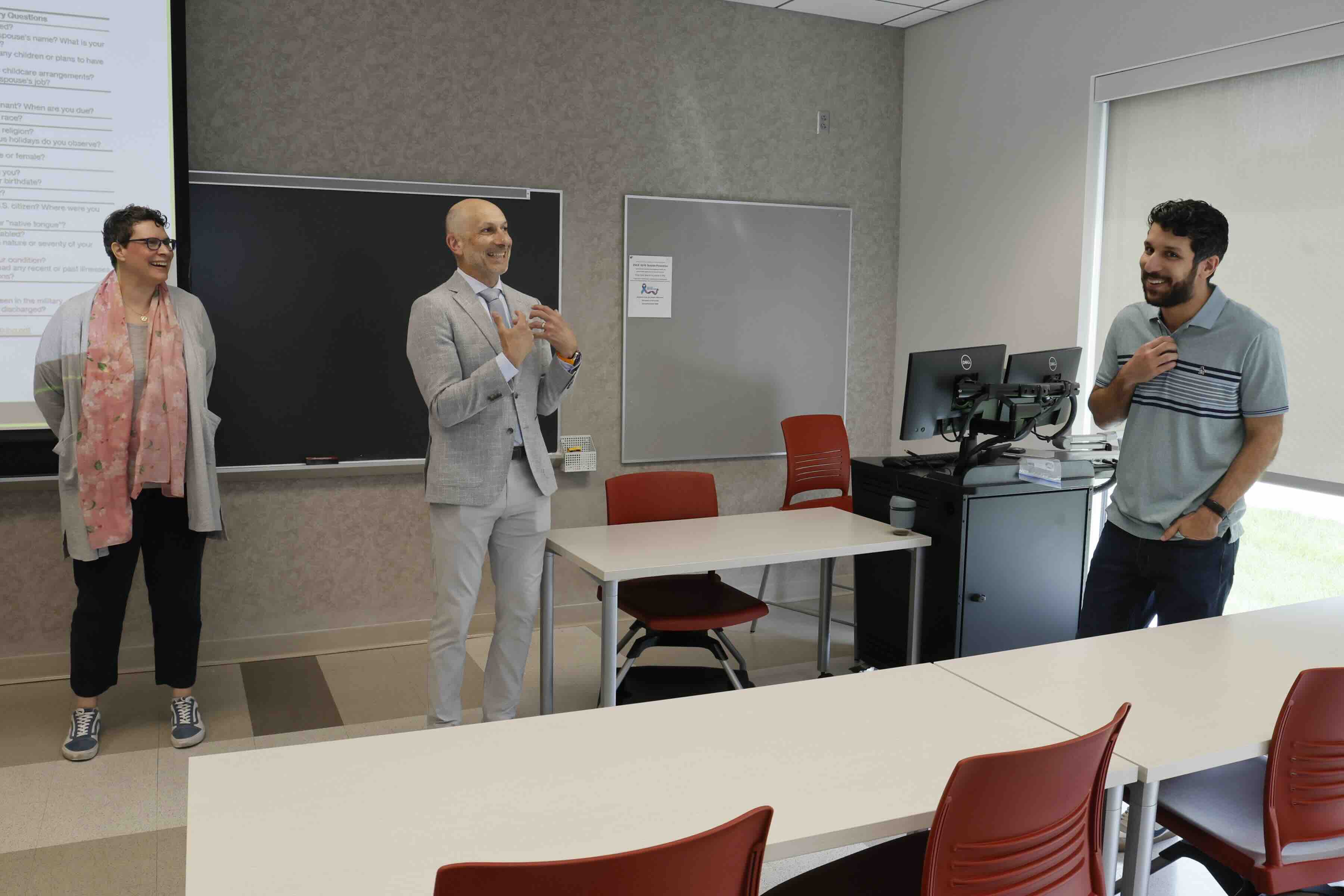
Arya Ansari, center, associate professor, receives an unexpected award from university and college leaders, including, L-R: Sue Sutherland, interim chair of the Department of Human Sciences; Erik Porfeli, interim dean of the college; Helen Malone, vice provost for Faculty Affairs; Patrick Louchouarn, senior vice provost for Leadership and External Engagement.
Professor is fourth in the college in three years to receive award
Arya Ansari ranks among the world’s top 2% of scientists, based on the Stanford/Elsevier list that quantifies how often scholars’ work is cited by others.
The associate professor of human development and family science has won two national awards recognizing his status as a early career rising star. Now, the university has recognized his contributions.
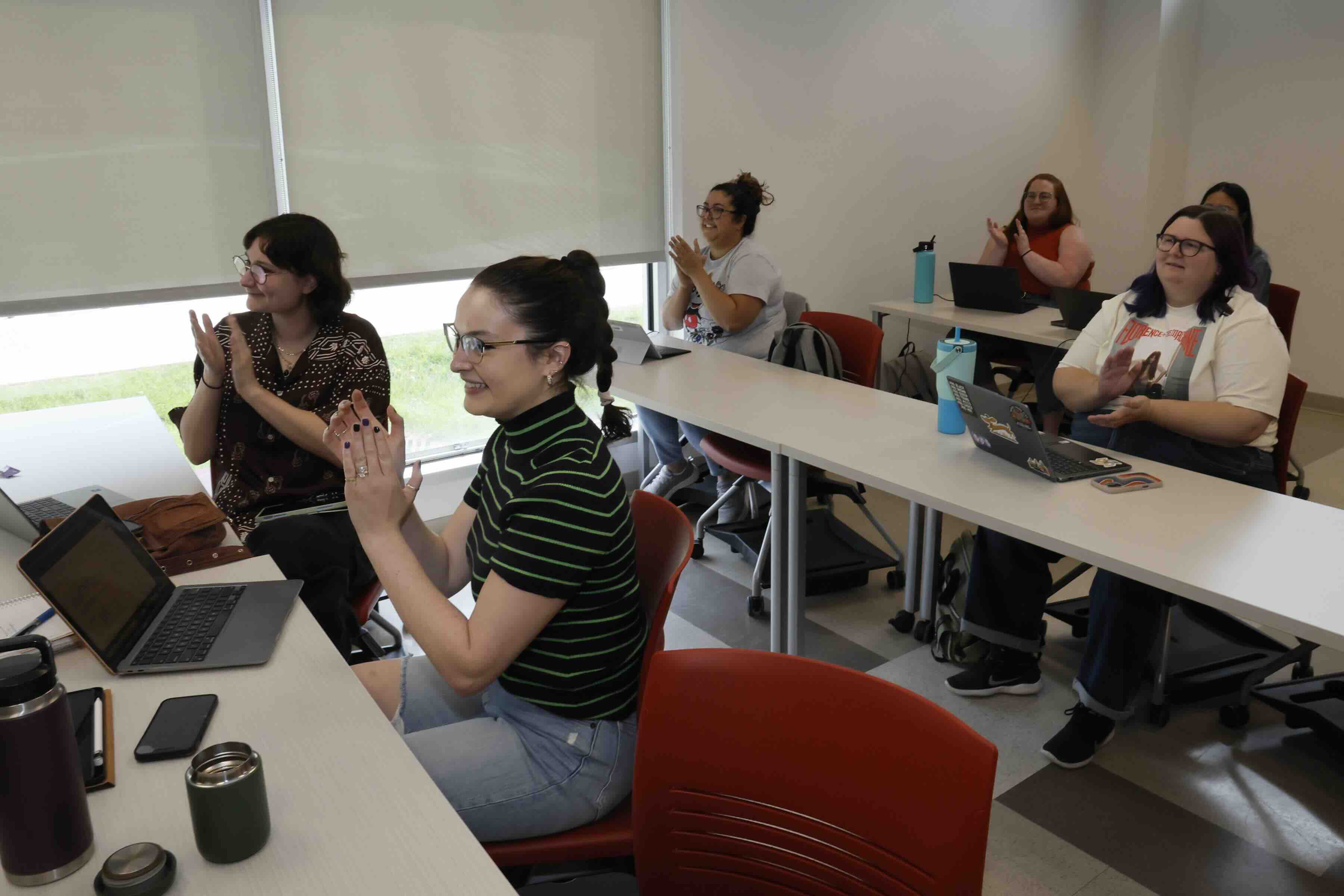
Ansari was teaching students in HDFS 8192-0010: The Human Sciences PhD Job Market when the door to his classroom opened unexpectedly and a delegation of university and college leaders entered.
Patrick Louchouarn, senior vice provost for Leadership and External Engagement, announced that Ansari had won a prestigious Ohio State award: the Provost’s Midcareer Scholars Award: Scarlet and Gray Associate Professor.
“This award is for a professor who earned tenure within the last three years,” said Helen Malone, vice provost for Faculty Affairs. “Part of it is for what you do — the research you do, the dollars you bring in.”
“But it also is for how you do this work, how you show up. You engage; you mentor; you provide service to the college; you do really good research. But it’s all founded on the ideology of showing up. So, for that, I thank you. We’re grateful to have faculty like you at the university.”
Ansari works closely with colleagues across his three areas of involvement within the college: the Human Development and Family Science program, the Department of Human Sciences and as a faculty associate with the Crane Center for Early Childhood Research and Policy.
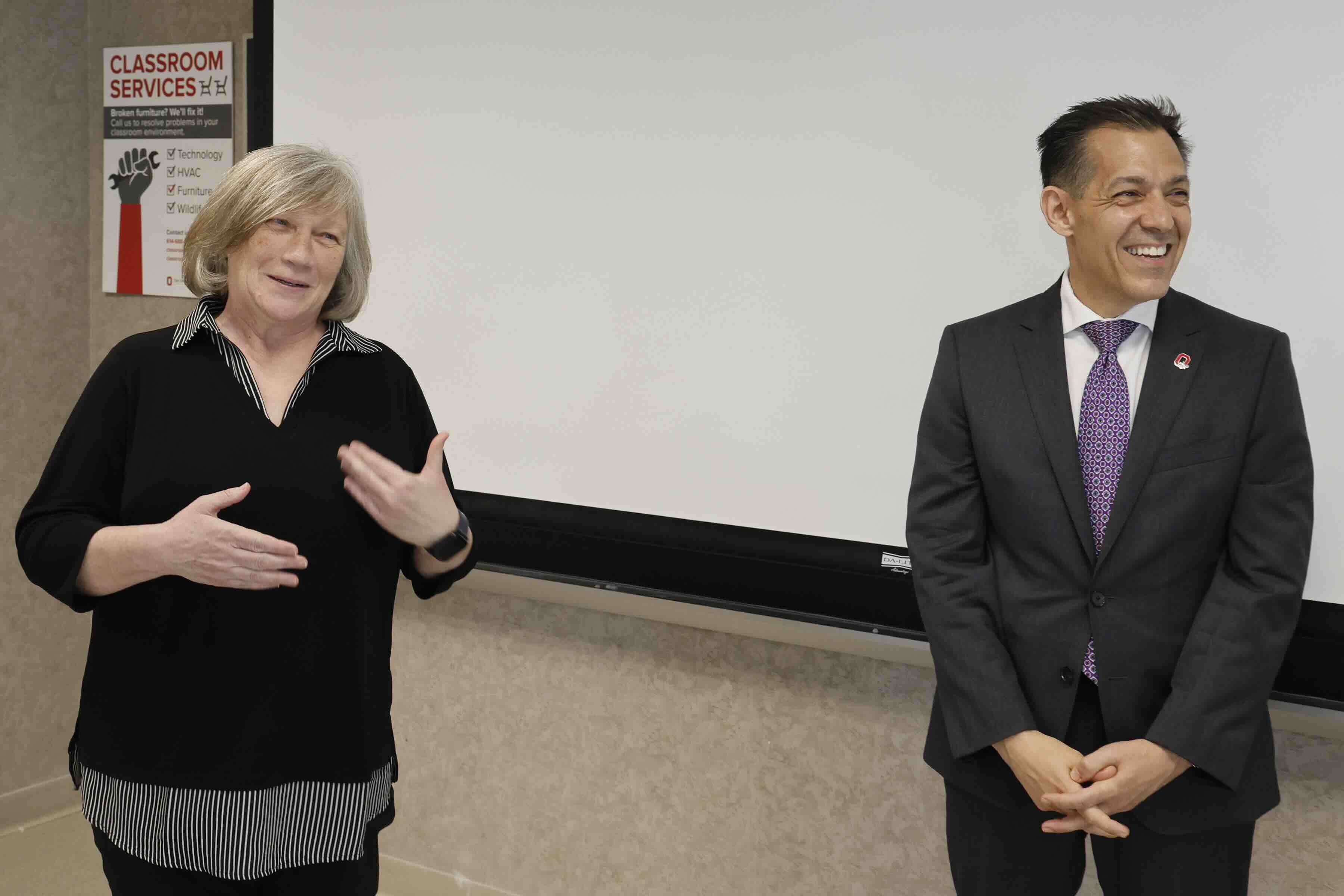
Erik Porfeli, interim dean of the college, praised Ansari’s contributions. “Your work is having a profound impact, not only on the scholarly community focused on early childhood development and education, but also on the practice-oriented side, through your research-based presentations and publications for families, educators and policymakers.”
“This means your work is affecting the lives of children and families every day,” Porfeli said.
“This award recognizes that you’re a consummate scientist, a consummate team scientist. You’re a demonstrated leader of a scientific agenda, and you are also a great support of your colleagues’ other important research agendas.”
Sue Sutherland, interim chair of Ansari’s Department of Human Sciences, also was on hand to emphasize his strengths. “Arya is one of the co-leaders of our research collaborative in the department and has done wonderful things to push that initiative forward,” she said.
“So, not only is this award for your own research, but you're helping people across the department, whether you’re engaging in high-quality scholarship or mentoring graduate students and our younger faculty. So, thank you for everything you do. Please keep on doing it.”
The many reasons to study with Arya Ansari
Ansari, a highly productive scholar, has authored 112 peer-reviewed journal publications and 17 book chapters and briefs. He is an associate editor of the journals Early Education and Development and Child Development, helping to curate the highest quality research from the field.
His most recent research focuses on chronic absenteeism, which refers to preschool through 12th-grade youth who miss 10% or more of the school year. His particular emphasis is on chronic absenteeism at the preschool level. His studies show such absenteeism has a negative impact on children’s later educational achievement.
Working with colleagues in the Department of Human Sciences, and as a faculty associate with the college’s Crane Center for Early Childhood Research and Policy, he conducts research and makes resources available on this topic. These range from research articles and briefs to tip sheets for parents, caregivers and educators to live presentations and webinars.
One of his recent research papers with colleagues appeared in the American Educational Research Journal and examined the impact of peer absenteeism on individual student attendance.
The researchers found that classmates’ absences increased a student's likelihood of being absent the following day, effects that persist even after removing absences attributed to illness.
Another paper in the journal Educational Policy, of which Ansari was first author with colleagues, used data from nearly 3,000 youth to examine the extent to which school absences at age 15 predicted key educational milestones by end of high school.
Among their findings, absences due to skipping at age 15 were more consistently associated with negative educational outcomes, such as higher rates of suspension and expulsion and lower high school grades, compared with health-related absences.
In a grant project for Columbus City Schools, Ansari is working with three college colleagues to address chronic absenteeism. Three students were employed as graduate research associates, showing the opportunities he provides: Maria Abdul-Mesih, Ashley Boros and Latif Kadir.
Their research documented that students with a stronger sense of belonging at the start of the school year were less likely to be absent for both excused and unexcused reasons.
Students who reported greater improvements in school belonging over the year also had fewer unexcused but not excused absences.
The researchers offered recommendations for practitioners.
Ansari was the keynote speaker at the Crane Center’s annual Symposium on Children last autumn, speaking about regular school attendance as an indicator of long-term success in life.
He also has given webinars for researchers and practitioners through the Crane Center and appeared on WOSU radio’s All Sides program, speaking on chronic school absenteeism.
Ansari has won two national awards that recognize his work. In 2023, he received the Rising Star Award from the Association for Psychological Science for scholars in the earliest stages of their research after receiving their PhD. It honored his innovative work that has advanced the field and signaled great potential for continued contributions.
He also won the Early Career Award from the Early Education and Child Development Special Interest Group of the American Educational Research Association in 2023.
With Ansari’s receipt of this university award, four of the college’s faculty have won it in the three years since it was created, a stellar showing.
In 2024, Jiangjiang “Chris” Zhu, associate professor of human nutrition, received the award, as did Kelly Purtell, associate professor of human development and family science.
In 2025, Rachel Kopec, associate professor of human nutrition, won the award.


