

Amanda Bird, center, with flowers, was recognized for her teaching by university leaders, including L-R: Sue Sutherland, interim chair, Department of Human Sciences; Erik Profeli, the college’s interim dean; Patrick Louchouarn, senior vice provost for Leadership and External Engagement; Helen Malone, vice provost for Faculty Affairs; Bird; R. Michael Townsend, Bird’s spouse; Susan Cole, chair, Department of Molecular Genetics, College of Arts and Sciences; Rob Jech, senior director of operations, Alumni Association.
“Amanda J. Bird is an extraordinary educator whose teaching, mentorship and curriculum development have made a lasting impact across multiple levels of education at The Ohio State University,” wrote a faculty nominator.
“Her dedication to student learning, innovation in course design and commitment to outreach exemplify the qualities celebrated by the university’s highest teaching honor.”
“Her enthusiasm is contagious,” wrote a graduate student nominator. “She prepares undergrads to teach genetics and DNA science to high schoolers, and in doing so, creates a unique classroom that blends science, education and community engagement.”
An undergraduate student who took that course agreed: “Dr. Bird’s talent for bridging audiences was unmistakable. She gave us the tools and confidence to take advanced topics and communicate them clearly to younger learners.”
“Watching her model this process, and then to be guided through doing it ourselves, showed me how powerful teaching can be when it builds not only understanding, but also a sense of belonging in science.”
Thanks to these nominations and more, Bird, associate professor of human nutrition, received a surprise announcement of her award during a recent meeting of the Department of Human Sciences.
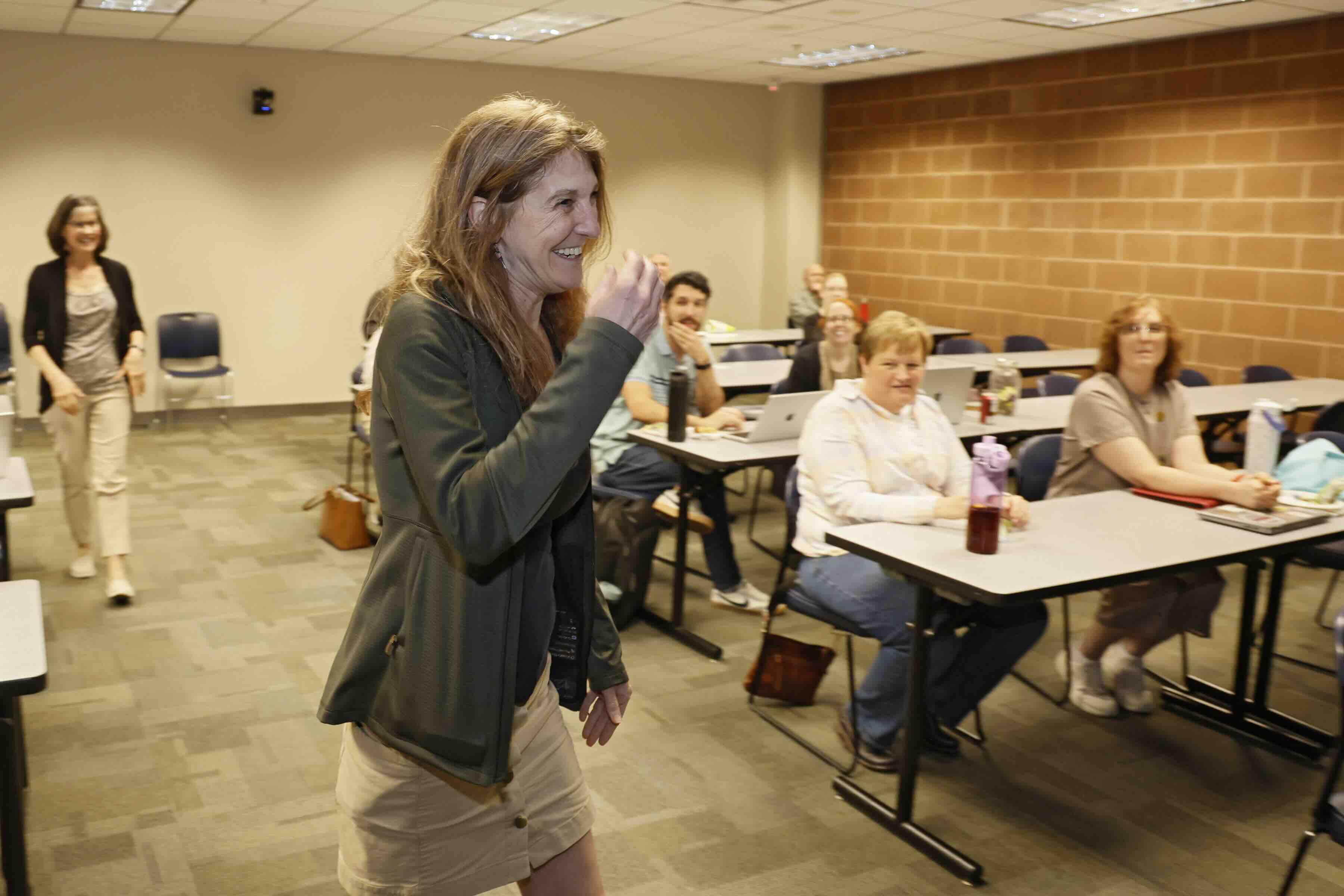
The door opened unexpectedly and a delegation of university and college leaders entered in a surprise visit.
Helen Malone, vice provost for university Faculty Affairs, announced to the room full of employees that Bird was one of 10 winners across the university this year of the Alumni Association Distinguished Teaching Award.
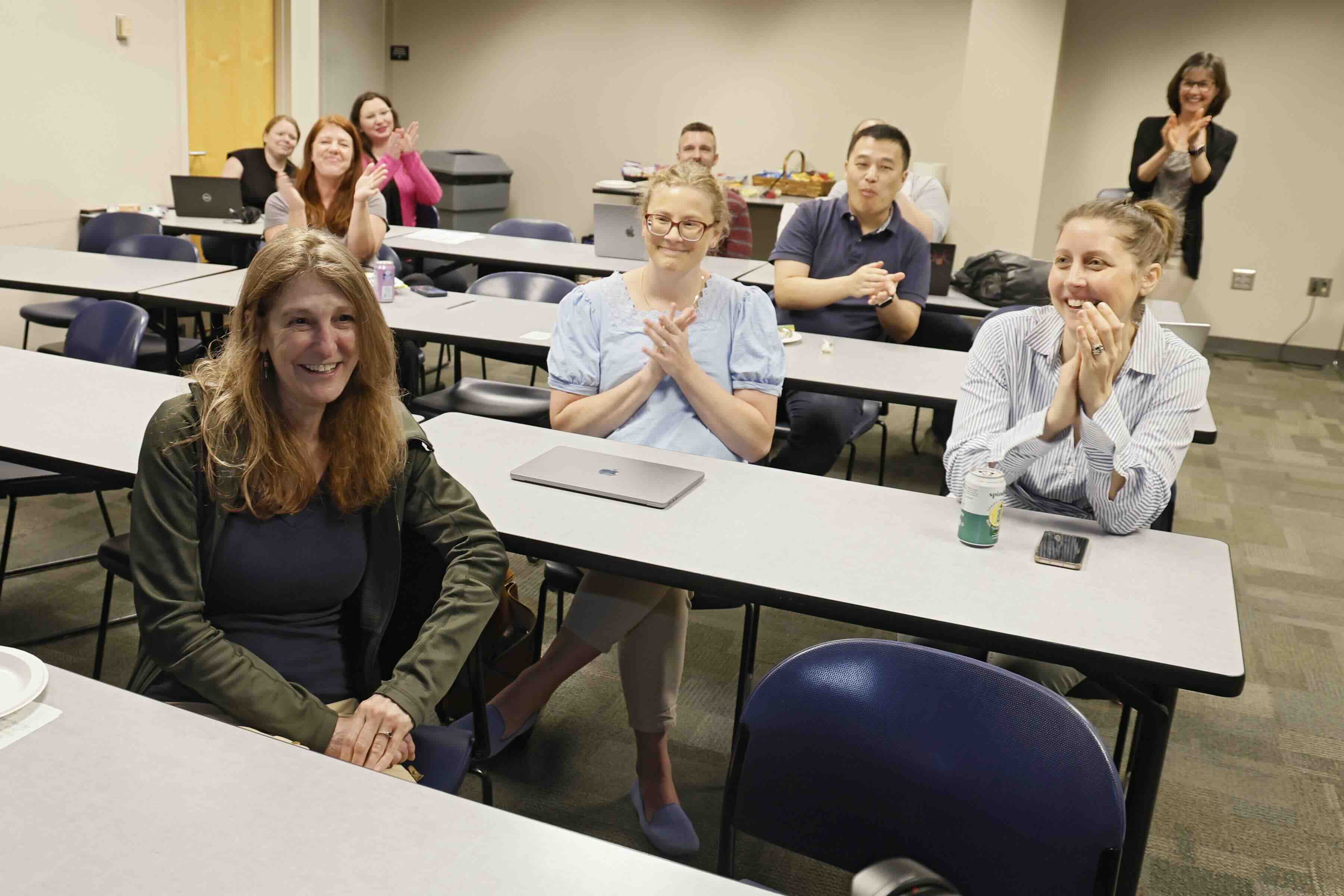
Faces lit up. The assembly applauded and cheered, being familiar with the prestigious honor bestowed on their colleague.
Bird recognized by university, her college, Department of Human Sciences
Bird teaches 80% of her time in the college’s Human Nutrition program, recently becoming its chair. The other 20% of her time is spent teaching in the Department of Molecular Genetics, College of Arts and Sciences.
As part of her human nutrition work, she also teaches in the Ohio State Nutrition PhD program, a unique degree in Ohio that is interdisciplinary across the university. Students participate from the colleges of Education and Human Ecology, Food, Agricultural and Environmental Science, Medicine and Veterinary Medicine.
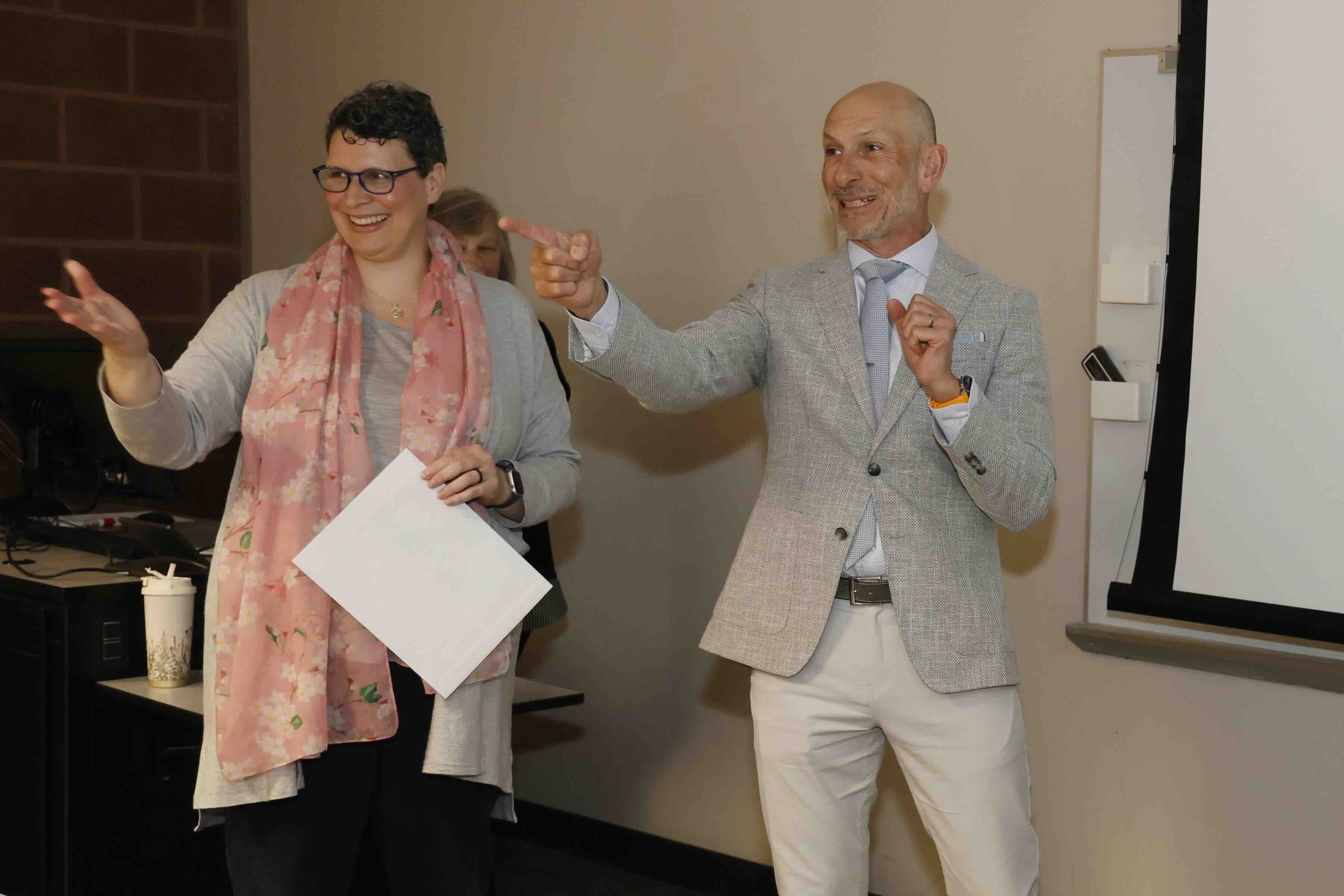
“This year, we had nominations from students, faculty and administrators across the university, which is a little unusual,” Malone said. “All recognized your teaching.”
“The thing that stands out to me is not just that you’re a good teacher, but how you engage with your students to make them feel seen and heard, how you’re ready to hear their feedback and make adjustments. And you do that across departments, which is not always easy, and you do it masterfully. Thank you for all that you do.”
Erik Porfeli, previously chair of Bird’s department and now interim dean, said he's had the pleasure of working with Bird in her role as program chair of the Human Nutrition program. "She plays a vital part in our teaching mission within that whole program."
“She’s also the immediate past director of our university-wide, interdisciplinary PhD program in nutrition and has led that enterprise to great success. As Helen said, her teaching spans multiple units. She is definitely accomplished in building quality programs that reach across disciplines."
Bird honored by her two departments, Alumni Association
Susan Cole, chair of the Department of Molecular Genetics, College of Arts and Sciences, was present to share her appreciation with Bird.
“In our space, she does a lot of engaging pedagogy,” Cole said. “She does a service-learning course that takes our students into Columbus City Schools to teach juniors about DNA. She does study abroad, so she’s creating novel, high-impact programming and we’re so proud to have her as part of our department.”
Rob Jech, executive director of operations with Ohio State’s Alumni Association, attended to represent the organization. We’ve sponsored this award for 67 years,” he said. “On behalf of our CEO and President Molly Ranz Calhoun, our Board of Directors and our (approximately) 630,300 living alumni as of the last commencement, we want to honor Dr. Bird for her tremendous contributions to the university.”
“Of all the nominations that I’ve read this year, the breadth and depth of nominations that you received — all 12 pages, including undergraduate students, graduate students, alumni, as well as faculty — were unmatched. You’re very deserving.”
Sue Sutherland, interim chair of the Department of Human Sciences, offered her praise next. “As you all know, Amanda is an outstanding teacher,” she said. “As Susan said, you go all the way from teaching in the city schools to leading high index human nutrition courses, and you do it with such amazing pedagogy and reach to all these students.”
“From the department’s view, that’s excellent, but you’re also one of the inaugural members of our department’s teaching academy. You’re firmly involved in that and supporting your fellow faculty in so many ways. You’re so deserving of this honor, and we thank you.”
Students appreciate Bird as teacher, mentor
Amanda Bird’s teaching spans undergraduate and graduate education and integrates biochemical foundations with applied human health.
She emphasizes scientific rigor, real‑world relevance and high‑impact learning experiences inside and outside the classroom.
In one course, Bird engages undergraduates in community‑focused education by bringing them into local high schools to teach, providing hands‑on experience in science communication.
An undergraduate who took this course wrote in her nomination: “She prepares undergrads to teach genetics and DNA science to high schoolers, and in doing so, creates a unique classroom that blends science, education and community engagement.”
“Amanda ensures that students are not only learning content, but also developing skills in communication, teamwork and outreach.”
Another undergraduate wrote in her annual student evaluation of teaching, “What a great class. If I wasn't graduating, I'd take this again in a heartbeat.”
In terms of experiential and place‑based learning, Bird led BIOLOGY 4798: Biological Roots in England during spring break. The study abroad program explored the historical foundations of modern biological science through immersive, site‑based learning.
One student nominator wrote, “This was not a traditional classroom experience, but I learned more from it than any classroom I have ever been in. Dr. Bird can take a new country and turn it into a classroom with her knowledge and effective communication skills.”
Bird has also taught The Science of Human Nutrition, a 2000‑level General Education course for non‑majors. This course has attracted more than 1,000 students since it was initiated. It reflects her sustained commitment to broad‑based science education and public scientific literacy.
Wrote one student of this course in annual evaluations of teaching: “I loved this class. After always struggling in science, Dr. Bird made it very easy to be successful… Dr. Bird has an awesome personality and enthusiasm for her profession.”
Bird teaches micronutrient metabolism courses at both the 7000 and 8000 levels. As a result, she plays a central role in advanced training for students in nutrition and biomedical sciences.
Research focus brings collaboration with peer, students
As a scholar, Bird leads a research lab focused on understanding how cells maintain zinc homeostasis, an essential yet tightly regulated process with profound implications for human health.
She and her graduate students investigate how cells sense, distribute and regulate intracellular zinc. This approach addresses fundamental questions relevant to metabolism, signaling and disease.
Her research lab also includes undergraduates, and together with graduate students, they explore the interplay between zinc and other essential micronutrients, as well as novel functions of human zinc transporters.
Bird’s work is collaborative and interdisciplinary. Recent publications include research with Andrew Weeks, an Ohio State undergraduate and graduate alumnus and current lecturer in the Human Nutrition program, published in Journal of Biological Chemistry.
She has conducted collaborative studies with faculty in Ohio State’s Department of Chemistry and Biochemistry, such as this one published in Protein | Science.
She also maintains an active collaboration with her colleague, Rachel Kopec and her lab, investigating novel strategies to improve the bioavailability of essential micronutrients.


