

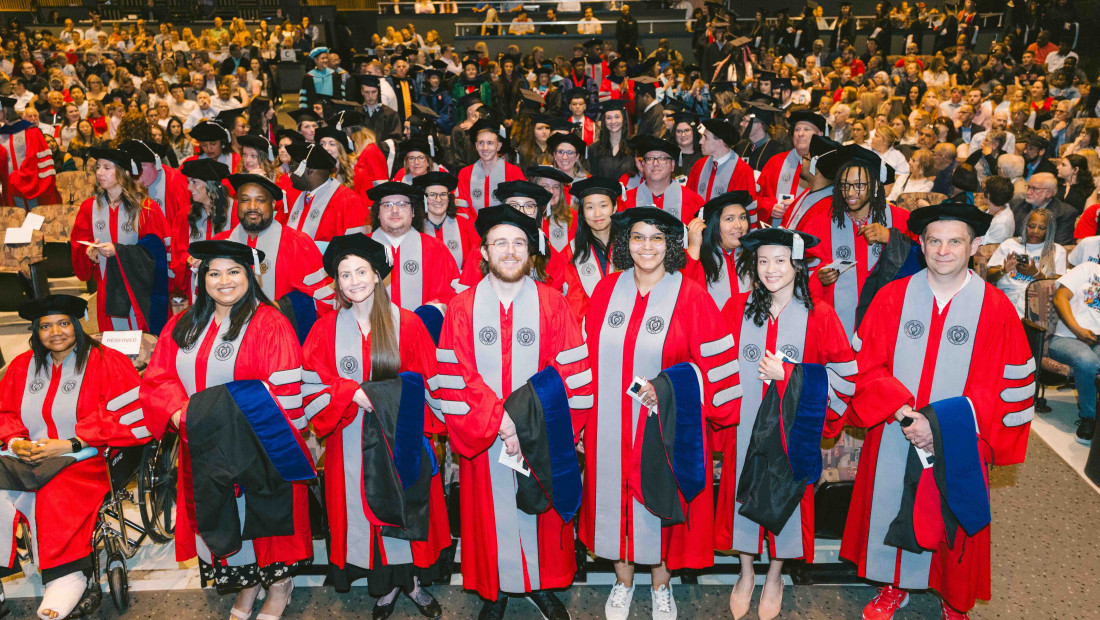
Graduates prepare to be recognized by their advisors at the college’s 2025 annual hooding ceremony for advanced degree recipients.
Graduates benefit from innovative research opportunities, professional preparation
The College of Education and Human Ecology moved up this year in U.S. News & World Report’s Best Graduate Schools of Education, claiming the No. 26 spot nationwide alongside five distinguished peers.
This positions the college as No. 9 among the Big Ten Academic Alliance, No. 18 among more than 170 ranked public universities and No. 1 among colleges and universities in Ohio — clear evidence of the college’s national impact and the solid prestige behind every one of its degrees.
Seven of the college’s specialty graduate programs rank in the top 10:
- Student Counseling -- No. 4 among 13 other programs
- Higher Education Administration, tied for No. 6 among 22 other programs
- Educational Administration and Supervision, No. 7 among 26 other programs
- Secondary Education is No. 8 among 19 other programs
- Curriculum and Instruction is No. 8 among 27 programs
- Elementary Education is tied for No. 9 among 18 programs
- Educational Psychology is No. 9 among 16 programs
Two of the college’s graduate programs ranked in the top 20:
- Educational Policy tied for No. 18
- Special Education tied for No. 19
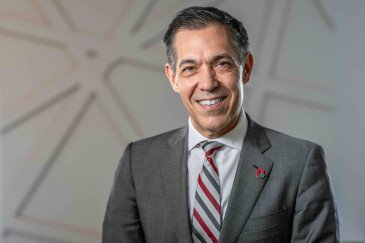
"The recent recognition of multiple EHE programs among the nation’s top ranks highlights the depth of excellence across the college and the faculty whose teaching and research make this work possible,” said Interim Dean and Professor Erik Porfeli.
“Our continued rise reflects their scholarship, instructional leadership and sustained commitment to graduate education.”
These rankings spotlight a college that is not just keeping pace with the field of education; it’s shaping its future.
Student Counseling specialty program ranks No. 4 in nation
The college’s Student Counseling program (called Counselor Education by the college) has attracted students for many years, given the excellent preparation that has allowed 100% of students to pass the state exam on the first try each year in recent history.
“We are excited that our CACREP-accredited program returns to the top five of the national rankings, as it reflects positively on the impact that centering our students' voices has had on its evolution and outcomes,” said Associate Professor Brett Zyromski, chair of the program. CACREP is the Council for Accreditation of Counseling and Related Educational Programs.
“Current students and graduates of our three tracks continue to have a measurable effect in support of holistic wellness of clients and students across the state of Ohio and the country.”
The three tracks are:
- MA in clinical mental health counseling
- MA in school counseling
- PhD in counselor education
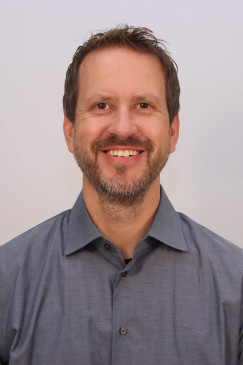
“Due to the high demand in mental health fields, 100% of our clinical mental health graduates find positions post-graduation,” Zyromski said. “Our doctoral graduates advance scholarship and leadership in counselor education programs nationwide.”
The college’s nationally recognized faculty collaborate with numerous partners, such as the college’s Center on Education and Training for Employment, to offer mental health support for educators, as well as suicide prevention work across campus and within medical systems. “Through these efforts, we help improve the well-being of clients and students across Ohio,” Zyromski said.
“As a master’s student in the clinical mental health counseling track, I have been thoroughly prepared to make a meaningful impact in the field of counseling,” Myles Smith said. “I have had the privilege to learn alongside a supportive cohort and engage with faculty who are invested in our growth as counselors.”
“Through the program and my clinical internship experiences, I have had numerous opportunities to grow my clinical expertise. I have developed a wide range of therapy skills allowing me to work effectively with complex populations, including individuals living with substance use concerns, trauma and various mood disorders. The university’s combination of relevant classroom and field experiences has equipped me with the ability to competently support clients as I take my first steps into the counseling profession.”
Chelsea Sample is a master's student who will graduate this spring. "This program has provided multiple levels of mentorship to support my growth and success as a school counselor-in-training," she said.
"I have felt supported every step of the way and knew that, whenever I had a question or concern, expert guidance was readily available."
"Over the course of my two years of study, I have gained hands-on experience in both elementary and middle school counseling settings. I have learned from exceptional mentors who I know will continue to support me throughout my professional journey as a school counselor, even after graduation."
Higher Education Administration ranks No. 6 nationally
Tied for sixth place among 22 other programs, the college’s program is known as Higher Education and Student Affairs (HESA). Its Student Personnel Assistantship (SPA) program provides meaningful, paid internships in offices serving students at Ohio State and neighboring universities.

“Being ranked sixth is a tremendous honor that reflects the dedication of our outstanding faculty, students and alumni,” said Clinical Associate Professor Amy Barnes, co-chair of the program with Professor Edward Fletcher. “For more than seven decades, HESA has prepared leaders who shape the future of higher education through our MA and PhD programs. Our theory-to-practice model, supported by the SPA program, has been central to that success.”
Recently, the program added a Doctor of Education (EdD) degree, created an innovative hub for qualitative research (QualLab) led by award-winning Professor Penny Pasque and aligned its academic programs with workforce development to meet the challenges of the current higher education landscape.
“At a time when colleges and universities face unprecedented challenges, our faculty are at the forefront,” Barnes said, “leading national scholarship, editing premier journals and attracting millions in research funding. Through these efforts, and through the professional impact of our alumni around the world, the HESA program continues to thrive,” she said.
"Choosing to study Higher Education and Student Affairs at OSU has unlocked opportunities I never thought possible,” said Anisha Gill-Morris, a PhD student and lead graduate research associate for the INSPIRES Campus Climate Index grant project under Professor Matthew Mayhew.
“Through formal research apprenticeship projects and informal conversations with faculty, I have gained mentorship in navigating journal publications and disseminating research at national conferences to connect with practitioners.”
“My contributions and ideas are respected,” Gill-Morris said, “which helps me feel more like a colleague than a student. The program has provided me with the tools to pursue a career of meaningful impact."
Educational Administration and Supervision ranks No. 7
This leadership program has a long history at Ohio State of training the country’s future school district superintendents, school principals and teacher leaders. Students receive extensive research and in-the-field experiences, gaining a distinct advantage as education innovators.
Among the other Big 10 Academic Alliance institutions, the program ranks No. 2 in the nation.

“Our program stands out for its commitment to developing purposeful, caring, quality-driven leaders who are prepared to make an immediate impact in schools and communities,” said Associate Professor Belinda Gimbert, program co-chair with Professor Roger Goddard, the Novice G. Fawcett Chair in Educational Administration. “Our faculty bring deep expertise and mentorship that support graduate students across multiple pathways.”
The program offerings range from the PhD to the Doctor of Education (EdD) program, designed for practitioner-scholars seeking to lead systems-level change. The courses include the Teacher Leader Endorsement that expands educators’ influence while remaining grounded in classroom practice.
“We are especially proud of the flexibility within our MA programs,” Gimbert said. “Students choose between a traditional thesis or a practice-based action research project, which allows them to directly connect theory to real-world challenges.”
Collectively, these experiences create dynamic, supportive opportunities for learning and practicing, where graduate students grow as leaders, scholars and advocates for educational excellence, she said.
David Fultz, '11 PhD, was recently named superintendent of Ohio's West Clermont School District, having been first a principal, then most recently assistant superintendent/chief people officer. He also is a lecturer for the college, teaching in the program from which he graduated.
Fultz was recently told that he will be honored in June by the School Nutrition Association as the 2026 Most Valued Superintendent of the Year. He credits the work of his district's Child Nutrition Department for the award. He includes the department on his district decision-making team.
“My experience in the PhD program provided a powerful bridge between theory and practice that continues to shape my leadership as a superintendent,” he said. “The program sharpened my ability to analyze complex systems, make data-informed decisions and lead with clarity of purpose.”
“Just as importantly, it cultivated in me a deep understanding of people, how to develop talent, build trust and align organizations around a shared vision. The balance of technical expertise and human-centered leadership has been foundational to my success in serving students, staff and the broader community.”
Jara Packer was the first graduate from the college’s Doctor of Education (EdD) in Educational Administration program when it launched in 2016. She currently serves as a special education administrator for Dublin City Schools and as an adjunct professor for the college’s Principal Licensure program.
“I have found the program to be exceptionally beneficial to my career as a practitioner,” Packer said. “It provided me with the necessary tools to not only interpret complex research in the field of education, but it also was a privilege to contribute by testing my own hypotheses regarding administrator feedback and a teacher's sense of self-efficacy.”
“There is often a significant gap between researchers and practitioners; this program effectively bridges that gap. Learning from such distinguished faculty at Ohio State provided me with the expertise required to discover best practices and collaborate with teachers to implement them in classrooms.”
Packer said the college makes substantial investment in its students and provides unparalleled research opportunities, making the program a top-tier option among doctoral programs.
“By offering flexibility for full-time professionals, while keeping the rigor of the program, Ohio State graduates have the potential to significantly impact the field of education to improve student achievement,” she said.
Elementary Education ranks No. 9, Secondary Education ranks No. 8
The college’s graduate programs in teacher education provide exceptional benefits to students aspiring to teach or become researchers or faculty. Curriculum and instruction programming, as ranked by U.S. News and World Report at No. 8, is embedded in each of these two programs.
Graduates from high-need subject areas, such as science or mathematics education, are known to receive multiple job offers due to their quality preparation and teacher shortages.
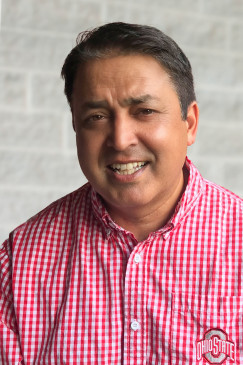
“Our programs are recognized nationally and internationally because of the educational impact they continue to have locally and globally,” said Professor Binaya Subedi, interim chair of the Department of Teaching and Learning. “Our faculty continue to engage in research that is innovative, impactful and deeply connected to improving education for all. Both faculty and staff are committed to working with schools and communities for a better future.”
“Our highly ranked programs offer a great opportunity for students to work with internationally renowned faculty who engage them in their transformative research and teaching practices. Graduate students also work with faculty on community work that further strengthens school-university partnerships. Our programs are designed to assist graduate students in becoming leaders in their fields. Through mentoring, they also take part in engaged scholarship.
“Upon graduation, our alumni take positions as educational leaders in schools, as faculty members in teaching or research institutions, as community leaders and as state or government officials.”
Iqra Abdi, '24 BS biology, '25 MEd, is now a high school science teacher. “When I entered the MEd program, I knew that I wanted to work with students who had similar backgrounds to my own," she said, "and who often did not see themselves represented in their teachers."
"I was lucky to get a student teaching position in Columbus City Schools working with the exact demographic of students I wanted to serve. After graduating, I had my pick of jobs but ultimately chose to stay at the same building where I student taught."
"While it has been challenging, I have loved every minute of working with my students and getting to see not only my students grow, but also myself grow as a teacher," she said.
Claire Hinterschied, a science teacher in the Pickerington School District, graduated in 2021 from Ohio State with a BS in microbiology, then earned her MEd in science education in 2025.
"My time in the Master of Education program was transformative,” Hinterschied said. “It was defined by stellar mentorship and rigorous coursework. A standout experience was Dr. Sophia Jeong’s STEM methods course at West High School, where I gained invaluable hands-on experience in Ms. Kelsea Gray's anatomy and physiology class.”
“The balance of didactic coursework and field training gave me a competitive edge in my job search,“ she said. “This foundation led to multiple job offers, ultimately guiding me to my current role teaching seventh-grade science at Pickerington Central Junior High — a position that is truly the perfect fit for me."
Educational Psychology ranks No. 9 in the nation
Professor Jerry D’Agostino, chair of both this program and of the Qualitative Research, Evaluation and Measurement program, testifies to the ongoing strength of the master’s and PhD offerings in the Educational Psychology program.
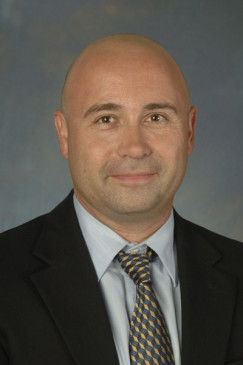
“The faculty and students are honored to be ranked among the nation’s top Educational Psychology programs,” D’Agostino said. “This recognition highlights the program’s cutting-edge research, strong scholarly community and sustained commitment to excellence in research, teaching and professional preparation.”
“The program continues to attract outstanding students who join a distinguished global network of graduates contributing to critical research and practice in education, psychology and related fields worldwide.”
Yeo-eun Kim, '20 PhD, is an assistant professor, Department of Education, at Sungkyunkwan University, the oldest and one of the most prestigious universities in South Korea. She previously served as an assistant professor at Florida State University.
Thanks to quality faculty mentoring and Kim’s focus on gaining research experience, Division 15: Educational Psychology of the American Psychological Association honored her in 2022 with the Paul R. Pintrich Outstanding Dissertation Award.
“The Educational Psychology PhD program gave me a strong foundation, both theoretically and methodologically, and I felt genuinely well-prepared to enter the faculty job market,” Kim said. “I was fortunate to receive rigorous training from outstanding faculty, including my academic advisor, Dr. Shirley Yu, along with mentorship and opportunities to present and publish with exceptional colleagues.”
“These experiences were invaluable in shaping my development as a scholar and educator. They continue to inform my work today by supporting a strong research agenda, effective teaching and meaningful connections between research and real educational challenges.”


